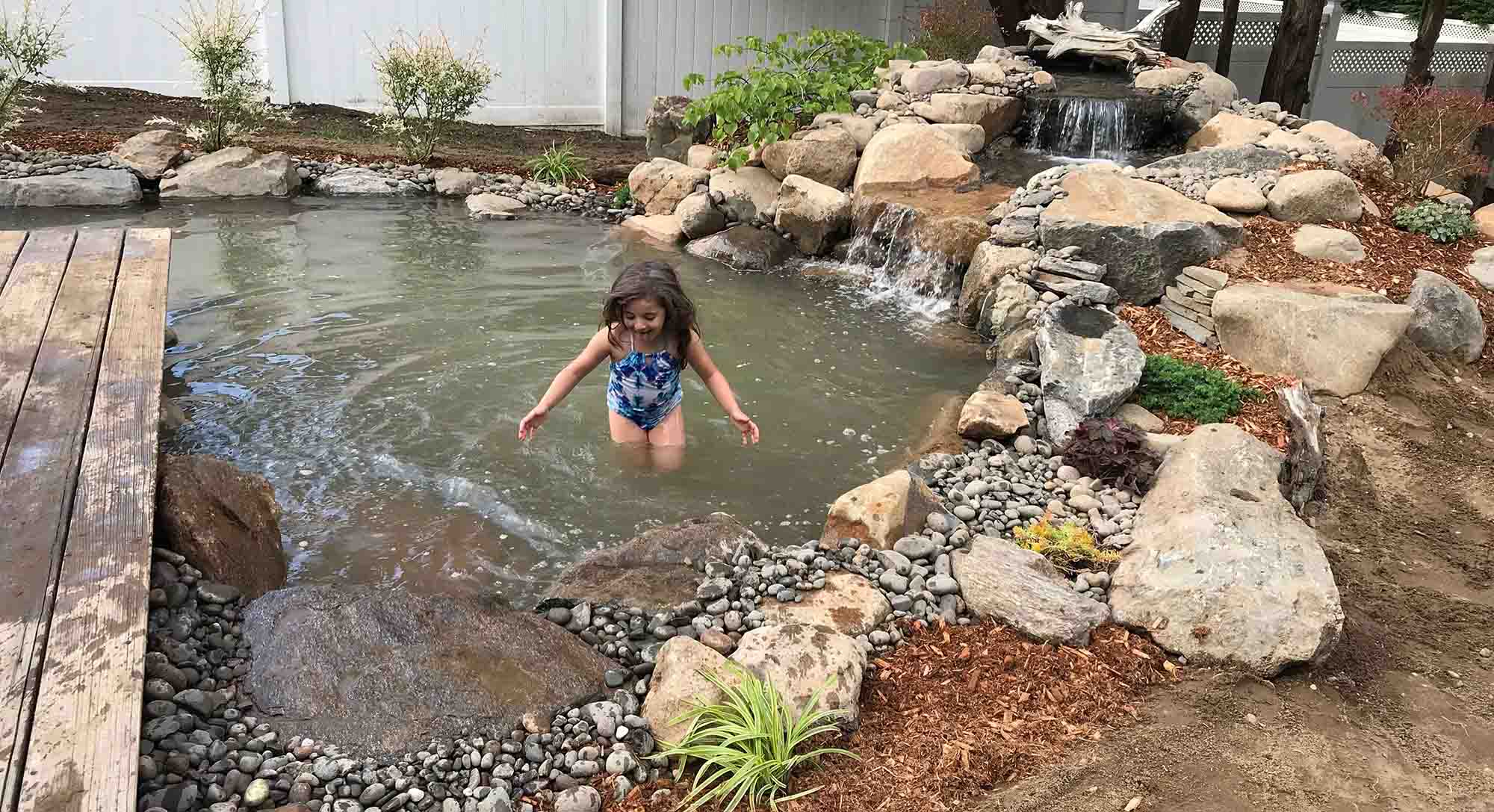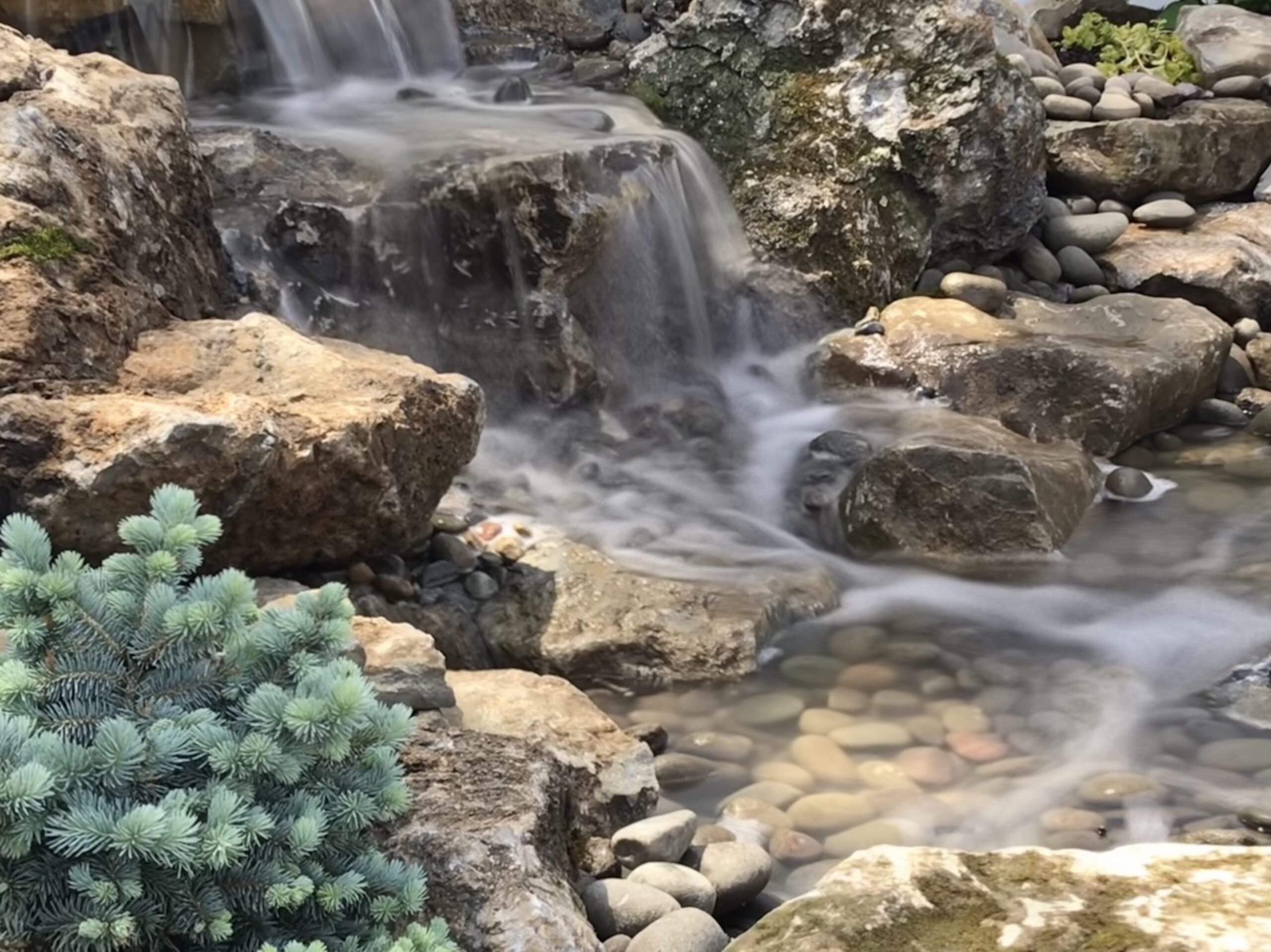
"Which is cheaper — a pondless waterfall or a koi pond?" It's the second-most-common question we get on Long Island consultations (right behind "how big should it be?"). The short answer: pondless waterfalls almost always cost less to install and significantly less to own over 10 years. The longer answer is more interesting, and it depends on what you actually want from a water feature.
If you haven't read it yet, our feature-by-feature comparison of pondless waterfalls vs koi ponds covers the lifestyle side. This post is purely about cost.
Why Pondless Waterfalls Cost Less to Install
The cost difference comes down to four things:
1. Less excavation
A pondless waterfall needs a buried reservoir — typically about 4×6 feet, 2 feet deep. A koi pond needs a much larger excavation, plus minimum 2-foot depth (often 3 feet on the deep end) to overwinter fish on Long Island. More dirt moved = more cost.
2. No biological filtration system
Pondless waterfalls don't have fish or significant biology to support, so they don't need a biological filter, a skimmer, or a UV clarifier. A koi pond needs all three.
3. Smaller pump, simpler plumbing
The reservoir-and-recirculate design is efficient. A pondless waterfall typically uses a smaller, less expensive pump than a comparable koi pond setup.
4. No livestock
Quality koi from a breeder add up fast. A starter collection of koi for a new pond is a real budget line item that doesn't exist for a pondless waterfall.
What Drives the Price of Each
Pondless waterfall cost drivers
- Stream length and drop — A 15-foot stream costs significantly more than a 6-foot waterfall
- Boulder selection — Larger, more sculptural stone increases material and labor
- Lighting — LED pond lighting for nighttime use is a popular add-on
- Site access — Tight backyards that require hand-carrying material increase labor
Koi pond cost drivers
- Pond size — Bigger ponds cost more per square foot, not less, because filtration scales up
- Depth and shelving — Required for fish health and predator protection
- Filtration tier — Standard biofalls vs. bead filter vs. bog filter
- Equipment — Skimmer, UV, aeration, auto-fill, controller
- Fish stock — Quality grade and quantity
- Hardscape integration — Patio, bridge, viewing area
For full breakdowns: Pond Cost on Long Island and Koi Pond Cost on Long Island.
Lifetime Cost: This Is Where It Really Diverges
Installation cost is one number. What it costs to own the feature over 10 years is the number that actually matters.
Pondless waterfall — annual ownership cost
- Electricity for the pump (small to moderate)
- Topping off the reservoir occasionally
- One pump cleaning per season
- Optional winter shutdown (no fish to worry about)
Most pondless waterfall owners spend almost nothing per year on maintenance after installation. That's the appeal.
Koi pond — annual ownership cost
- Fish food (koi eat a lot once they're full-size)
- Water treatments and beneficial bacteria
- Spring opening / fall closing
- Seasonal cleanings — most owners hire this out
- Replacement filter media
- Electricity (larger pump runs year-round)
- Occasional vet care or treatment if fish get sick
A koi pond is a hobby with ongoing cost. Our annual maintenance plans bundle the seasonal work for predictable budgeting.
The Honest Cost Verdict
If "cheapest to install and own" is the only criterion, the answer is always pondless waterfall. The install is meaningfully less, and the ownership cost approaches zero.
But cost-per-enjoyment is a different equation. Koi pond owners overwhelmingly say the experience of raising fish — watching them grow, learning their personalities over decades — is worth the higher ownership cost. That's a personal call, not a budget call.
The Hybrid Option Most People Don't Know About
You can install a pondless waterfall now and convert it to a koi pond later. We've done this dozens of times across Huntington, Smithtown, and the East End. The waterfall structure stays, we add a pond basin in front of it, and you get to test-drive water feature ownership before committing to fish.
If you're cost-sensitive but might want fish someday, this is usually the smartest path.
How to Get a Real Number for Your Yard
Cost ranges in blog posts only get you so far. Both feature types vary substantially based on site conditions, size, and material selection. The fastest way to a real number is a free on-site consultation — we walk your yard, talk through what you actually want from the feature, and give you a custom written quote for both options if you want to compare.
Not sure which one fits your lifestyle? Start with the Water Feature Quiz — it takes 2 minutes and gives you a recommendation based on your yard, family, and how hands-on you want to be.