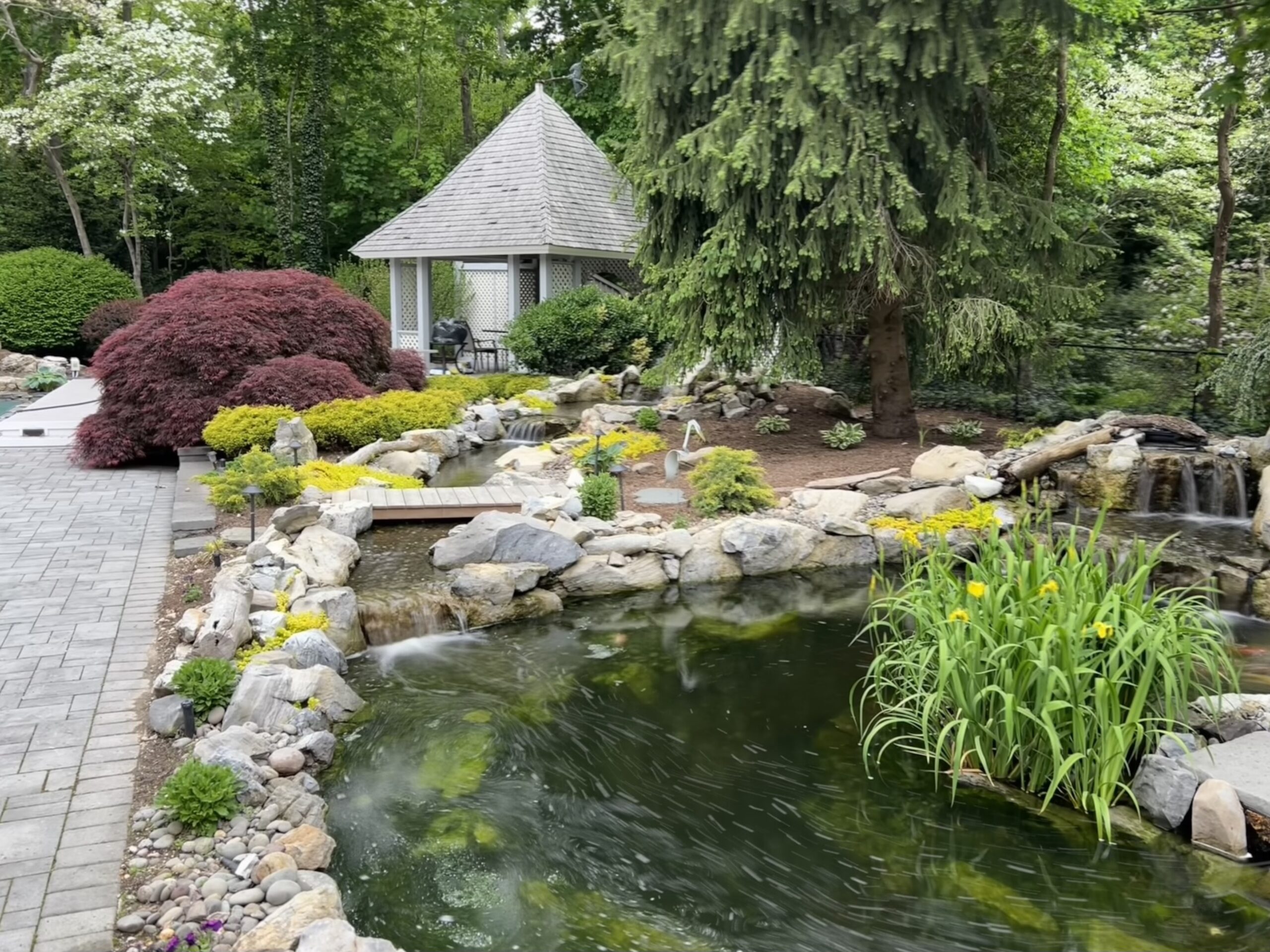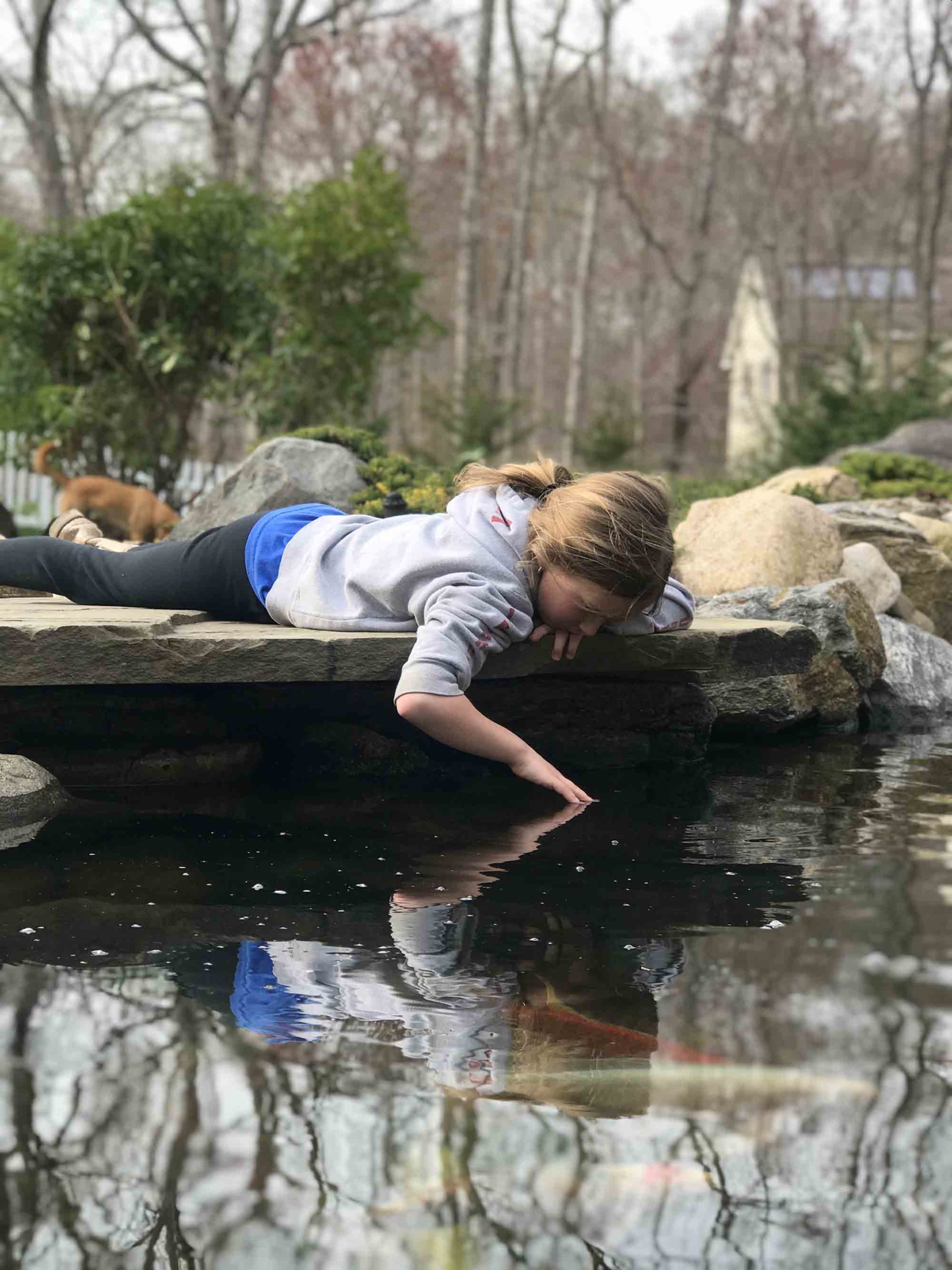
Most Long Island pond owners think about winterization in November when the first frost hits. By then, you're already behind. The work that determines whether your koi survive the winter and your pond opens cleanly in spring happens in September and October. Here's the checklist we run on every pond we maintain across Nassau and Suffolk County.
This is the prep before winterization. For the cold-weather shutdown itself, see our winterize your koi pond guide.
Why Fall Prep Matters More Than Spring Cleaning
A pond that's properly prepped in fall opens with clear water, healthy fish, and minimal algae in spring. A pond that wasn't prepped in fall opens with a layer of decomposed leaves, ammonia spikes, sick or dead koi, and a green-water bloom that takes 6+ weeks to clear. Spring problems are almost always fall mistakes.
September: Get Ahead of the Leaves
1. Install pond netting before the leaves drop
This is the single most important fall task. Leaves that fall into the pond sink, decompose, release tannins (brown water), consume oxygen, and produce toxic ammonia all winter under the ice. Net the pond before the first leaves fall — usually late September on Long Island. Suspend it above the water on stakes so leaves don't pool in.
2. Begin reducing feeding
Cut feeding from 2–3 times per day to once per day as water temps drop into the 60s. Switch to a wheat germ–based "cold weather" food. This food digests faster at lower temperatures, which prevents the same gut-rot deaths we warn about in spring.
3. Trim and divide aquatic plants
Cut back hardy plants (lilies, lotus) to a few inches above the crown. Move them to the deepest part of the pond. Remove tropical plants entirely — they won't survive a Long Island winter.
4. Last full water test of the year
Test ammonia, nitrite, nitrate, pH, and KH. Address any issues now while the biofilter is still active. You can't fix water chemistry in 35°F water.
October: Equipment & Cleanout
5. Pump out muck and debris
Use a pond vacuum to remove the layer of sludge that's built up on the bottom over the summer. This is organic matter that will decompose all winter and consume oxygen your koi need to survive under ice. A thorough fall cleanout is the #2 most-skipped task — and the #1 cause of spring fish loss.
6. Clean the skimmer and biological filter
Empty the skimmer basket, rinse filter pads in pond water (never tap water — it kills the bacteria), and inspect the pump intake. Catch worn pre-filters now while replacements are easy to find.
7. Stop feeding once water drops below 50°F
On Long Island this is typically mid- to late October on the North Shore, slightly later on the South Shore. Once water is consistently under 50°F, do not feed — even if the fish look hungry. Their digestive systems have shut down for the season.
8. Inspect and document equipment condition
Take photos. Note which equipment is approaching end-of-life. Order replacements over the winter when supply chains are calm rather than scrambling in April. This is also the right time to plan any renovation work for next year.
Early November: Prepare for Winterization
9. Decide: shut down or run through winter?
On Long Island both approaches work. Shutting down the waterfall and adding an aerator + de-icer is more energy-efficient and easier on equipment. Running through winter looks beautiful with ice formations but requires constant monitoring to prevent freeze damage. We help homeowners weigh the trade-off based on their specific pond.
10. Install your de-icer and aerator
A floating de-icer keeps a small hole open in the ice — critical for gas exchange. An aerator placed at mid-depth (not on the bottom) provides oxygen without circulating super-cold water down to where your koi are resting. Both should be tested and in place before the first hard freeze.
Long Island Fall Timing by Area
The fall window varies by 2–3 weeks across Long Island:
- North Shore Nassau (Great Neck, Oyster Bay): Net pond by Sept 25, stop feeding by Oct 20
- South Shore Nassau (Massapequa, Wantagh): Net pond by Oct 1, stop feeding by Oct 25
- Suffolk County (Huntington, Smithtown, Patchogue): Net pond by Oct 5, stop feeding by late October
- East End (Sag Harbor, East Hampton): Net pond by Oct 10, stop feeding by early November
Fall Mistakes That Show Up in Spring
- No netting → decomposed leaves, ammonia spikes, dead fish in March
- Skipped fall cleanout → 6+ weeks of green water in April-May
- Continued feeding past 50°F → undigested food rots in fish gut, fatal bacterial infections
- No de-icer → ice seals the pond, gases build up, fish suffocate
- Aerator on the bottom → circulates freezing water through the deep zone where koi rest
Want Us to Handle Fall Prep?
Fall prep is included in our annual maintenance plans, or we can do it as a standalone fall maintenance service. We bring the netting, do the deep cleanout, switch your feeding schedule, and install winter equipment — so your pond is genuinely ready before the first freeze, not after. Book your fall service by early September; October books up fast across Long Island.